Industrial hygiene and air quality
It also means a
healthier business.
Investing in a healthy workplace supports employee health and organizational performance.
At Airtests Mattests, we help businesses and institutions assess environmental factors that may affect occupants’ health, safety and comfort.
Our expertise in industrial hygiene and air quality provides documented findings and practical recommendations to guide your decisions.
A healthy environment, a thriving business!
Industrial hygiene and occupational exposure assessment.
Assessment of chemical contaminants, dust, aerosols, biological agents and other environmental factors that may affect working conditions.
Our services may include technical inspections, instrumental measurements, environmental sampling and targeted occupational exposure assessments.
Objective
Identify hazards, document exposure conditions and guide preventive and control measures.

Indoor air quality.
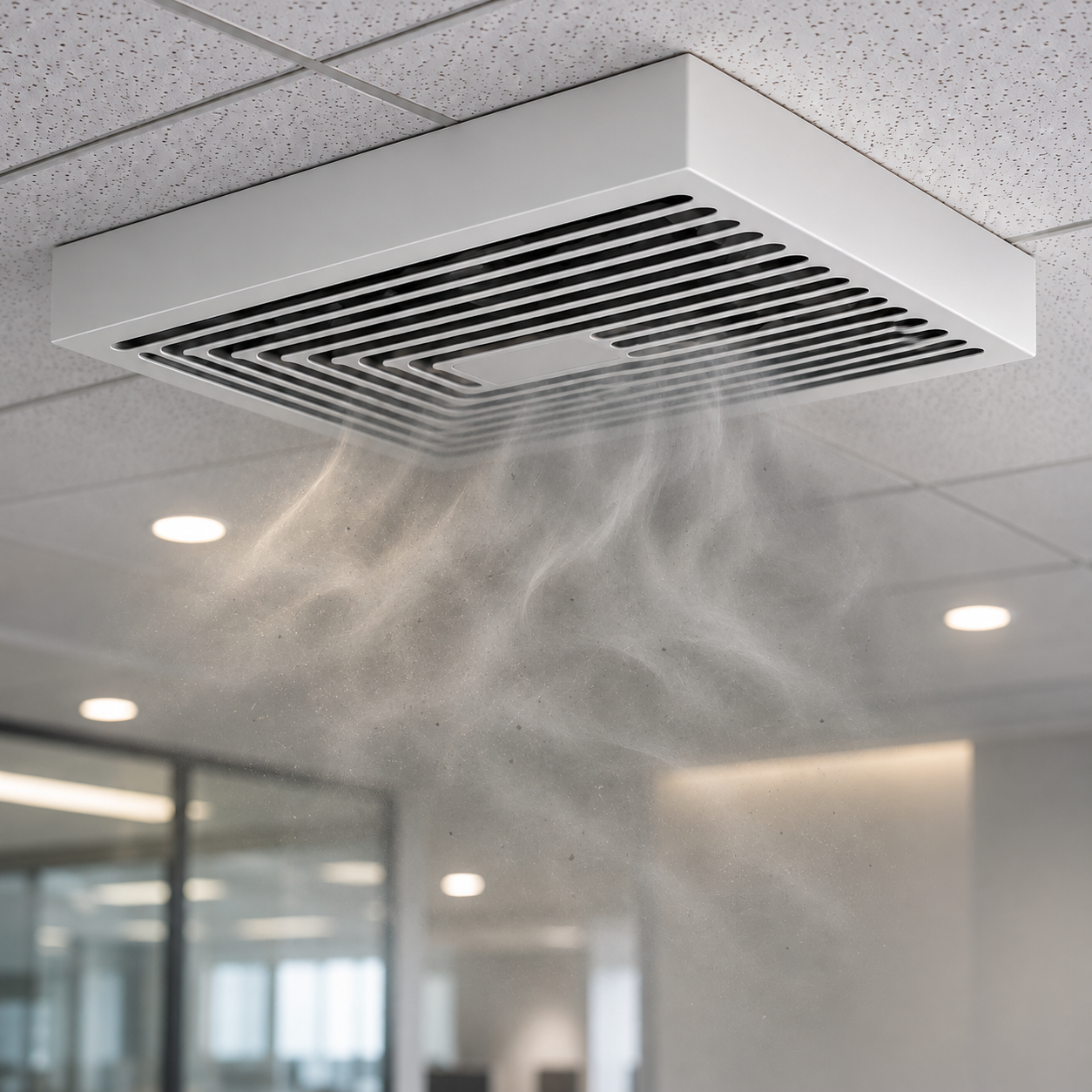
Assessment of environmental conditions inside industrial, commercial and institutional buildings.
Our services include characterizing airborne contaminants, examining ventilation conditions and identifying factors that may contribute to occupant discomfort or deteriorating air quality.
Objective
Better understand indoor environmental conditions and help maintain healthy, comfortable workplaces.
Building health and material characterization.
Inspection and assessment of issues that may affect building health, including excessive moisture, water infiltration, fungal contamination and potentially contaminated materials.
Our assessments document observed conditions, characterize the issues and guide appropriate corrective action.
Objective
Maintain healthy buildings, prevent deterioration of indoor environments and support responsible property management.
Industrial hygiene:
An investment that benefits everyone.
For employees:
a healthier, more comfortable workplace.
A workplace that is properly assessed and controlled helps reduce exposure to contaminants, prevent certain health risks and improve the conditions in which employees carry out their daily tasks.
Addressing environmental concerns also promotes confidence and a sense of safety, particularly when assessments are objective, results are clearly explained and corrective measures are appropriate.
A healthy, comfortable environment provides employees with conditions that better support their well-being, concentration and engagement at work.
For employers:
a more confident, better-equipped organization.
For business leaders, investing in industrial hygiene is much more than an expense associated with occupational risk prevention.
Proactive management of environmental conditions can help reduce certain sources of discomfort and dissatisfaction, prevent conflict and improve relationships among employees, managers and their representatives.
It also helps organizations respond to staff concerns, document problematic situations and reduce uncertainty that may fuel internal complaints, union involvement or occupational health and safety disputes.
By promoting more satisfactory working conditions, this approach can also support team engagement, help prevent certain health-related absences and create conditions more conducive to productivity.
Better-managed workplace conditions contribute to more predictable management, more constructive working relationships and smoother business operations.
Taking preventive action:
the cost of inaction.
Concerns about air quality, dust, chemical contaminants, mould, noise or other environmental factors can become significant sources of worry when left unresolved.
An environmental issue that has not been assessed may persist unnecessarily, fuel conflicting perceptions and consume considerable human, administrative and financial resources.
In some circumstances, the indirect cost of inaction may greatly exceed the cost of a timely environmental assessment.
A professional industrial hygiene assessment characterizes existing conditions, evaluates exposures when needed and determines whether preventive or corrective measures are warranted.
It can also help avoid costly or disproportionate interventions when no significant issue is identified.
Prevention involves more than identifying problems. It also means understanding their actual significance so that appropriate action can be taken at the right time, using the right resources.
Objective data:
for informed decisions.
When an environmental concern arises in a business, employees, managers and other stakeholders may perceive the situation differently.
Our role is to establish an objective understanding based on technical observations, instrumental measurements and, when needed, sampling strategies and specialized analyses.
At Airtests Mattests, we prioritize measurable facts, scientific interpretation and professional independence.
Our assessments determine the nature and significance of contaminants or environmental factors, examine exposure conditions and provide recommendations tailored to each facility’s operations.
This approach replaces assumptions with documented information and encourages constructive dialogue among the parties involved.
Our objective is to establish facts that support sound decisions, rather than simply confirm perceptions.
Our approach
From assessment to recommendations in three steps
01.
Understand your needs
We discuss your operations, workplace environment and concerns to define the assessment objectives and identify relevant analyses.
02.
Assess and sample
We inspect the premises and perform measurements and air, surface or material sampling, based on the contaminants of interest and the conditions observed.
03.
Interpret and recommend
We interpret the results and present our findings in a clear report, with recommendations to guide appropriate preventive or corrective measures.
